

Silicone roof coatings have become a go-to solution for extending the life of commercial and flat or low slope residential roofs. Their durability, UV resistance and water-repelling properties make them an excellent choice for protecting roofing systems. The thickness of the coating plays a critical role in performance, longevity and especially warranty length. To achieve a needed thickness, this blog will look at a common question we get: “How much silicone do I need?”
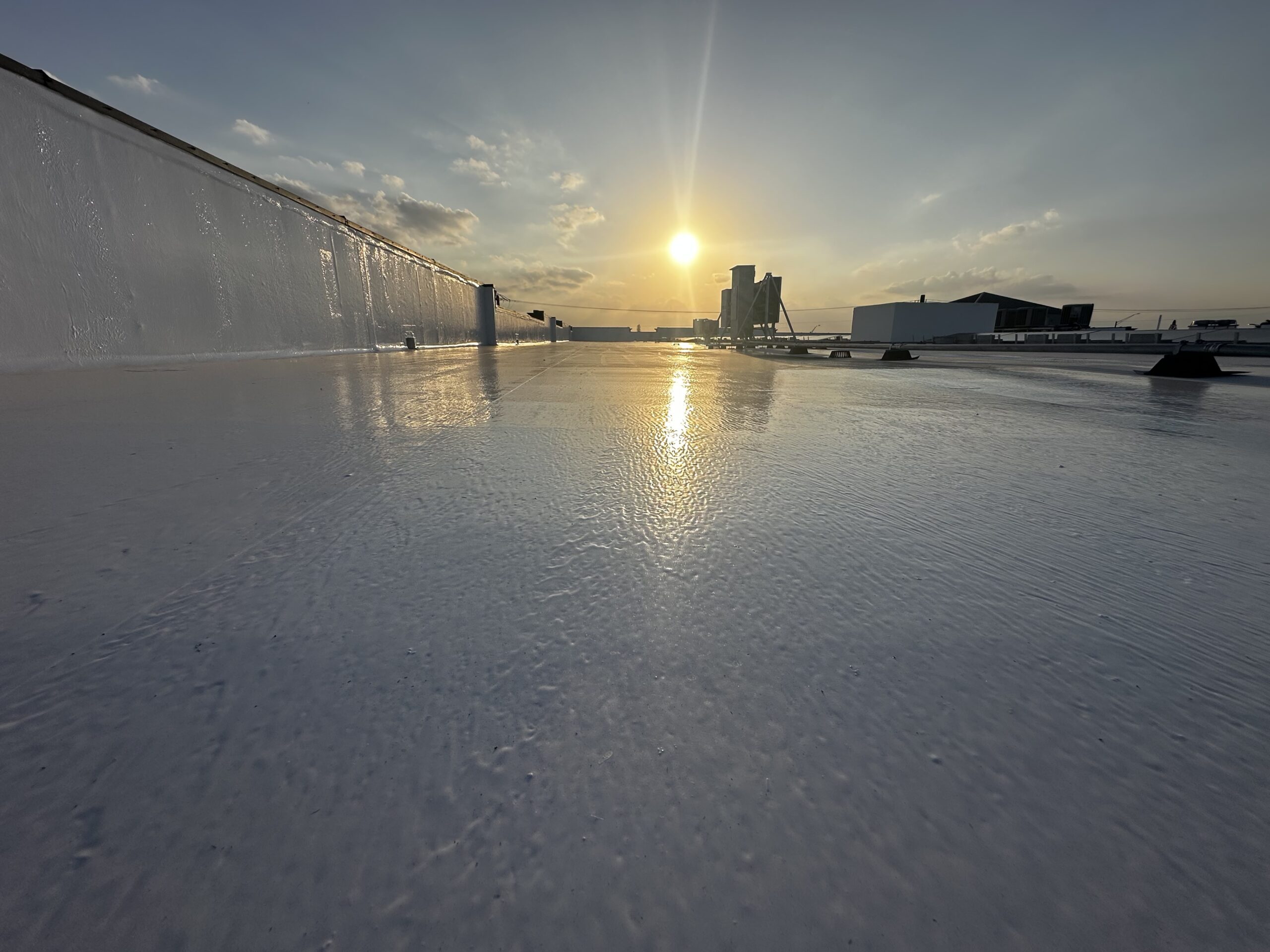
Determining Roof Coating Thickness?
Silicone coatings are applied in liquid form and then cured to form a solid, monolithic membrane. The thickness of this membrane is measured in “mils” (1 mil = 1/1000 of an inch). Depending on the application and roof type, a typical Progressive Materials silicone roof coating can range from 15 to 40 mils thick.
Key reasons why thickness matters include:
- Durability and protection: A thicker coating naturally provides more material to resist environmental stressors. Thicker silicone membranes offer enhanced protection from ponding water, UV degradation and weather-related wear. In areas with heavy rainfall or high UV exposure, a thicker coating is more likely to withstand the elements over time without premature failure.
- Coverage and seam integrity: Roofs often have imperfections, seams and penetrations that require complete coverage to prevent leaks. A coating that’s too thin may not fully encapsulate these vulnerabilities, leaving them exposed. Adequate thickness ensures better sealing of seams, fasteners and flashing details.
- Warranty eligibility and length: Perhaps the most tangible reason thickness matters is warranty length. PM determines the length of the warranty based on how thick the silicone coating is applied and the roof type. For example, on a metal roof:
-
- A 10-year PM warranty requires 20 mils of dry film thickness.
- A 15-year PM warranty calls for 25 dry mils.
- A 20-year PM warranty requires 30 dry mils.
Our Silicone Coverage Guide here provides more details on how much silicone is needed for specific substrates. These guidelines exist because a thicker coating will, on average, last longer before needing maintenance or re-application. Thicker membranes resist wear and UV damage more effectively over extended periods, justifying a longer warranty.
Ensuring Proper Thickness
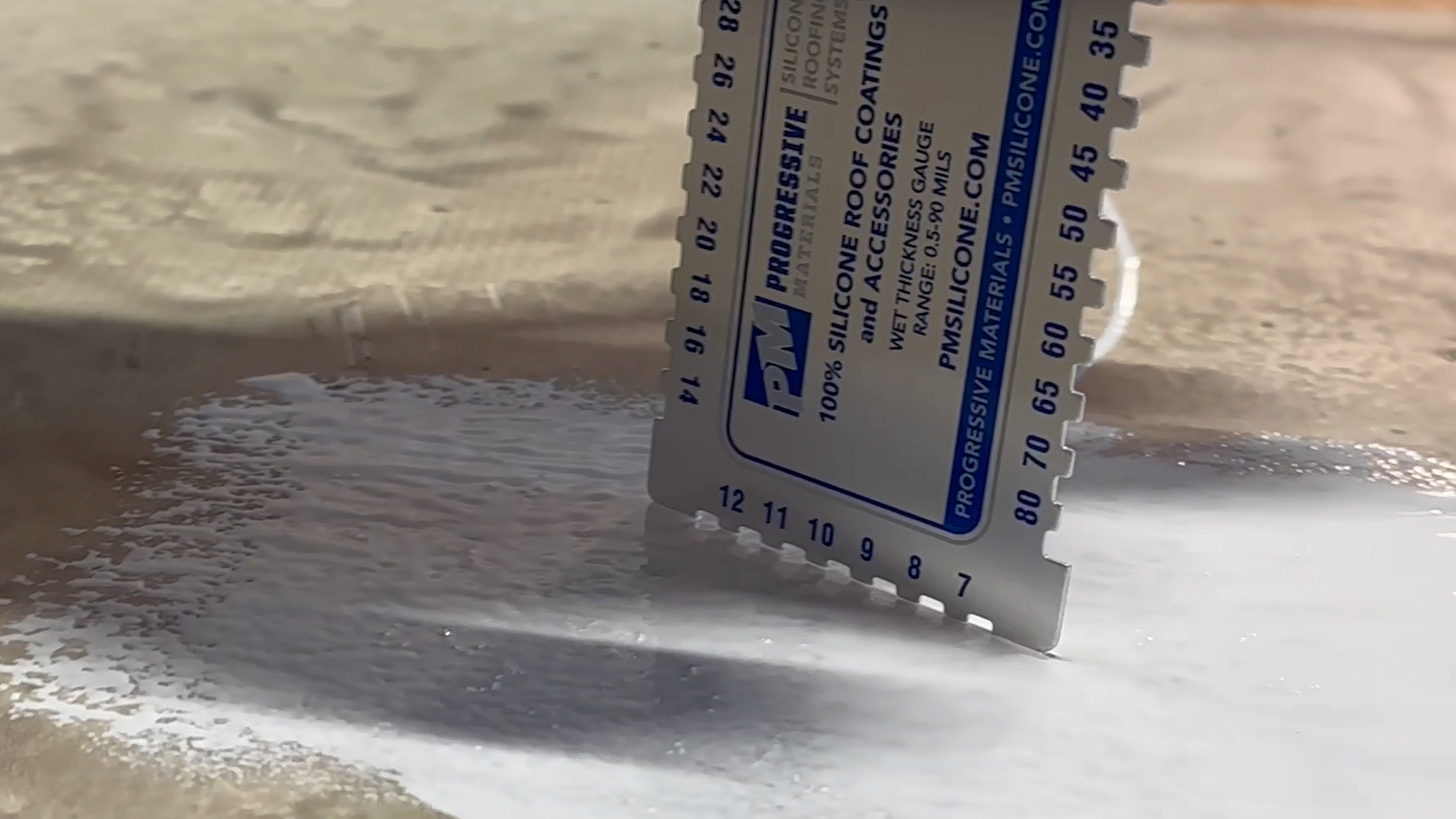
To meet warranty requirements, it’s essential that contractors apply silicone coatings at the correct thickness. This is typically measured using a wet mil gauge during application and verified after curing with dry film thickness testing. Inconsistent or inadequate coverage could result in warranty denial, even if the coating appears intact. You can reach out to your PM Regional Manager here with any questions.
Conclusion
Silicone roof coating thickness isn’t just a technical detail — it’s a foundational aspect of roof longevity and warranty coverage. Building owners and facility managers should work closely with PM-certified contractors to ensure the coating meets PM specifications for the desired warranty length. Investing in proper application today can save thousands in repairs and replacements down the line.
Thanks for reading.
