

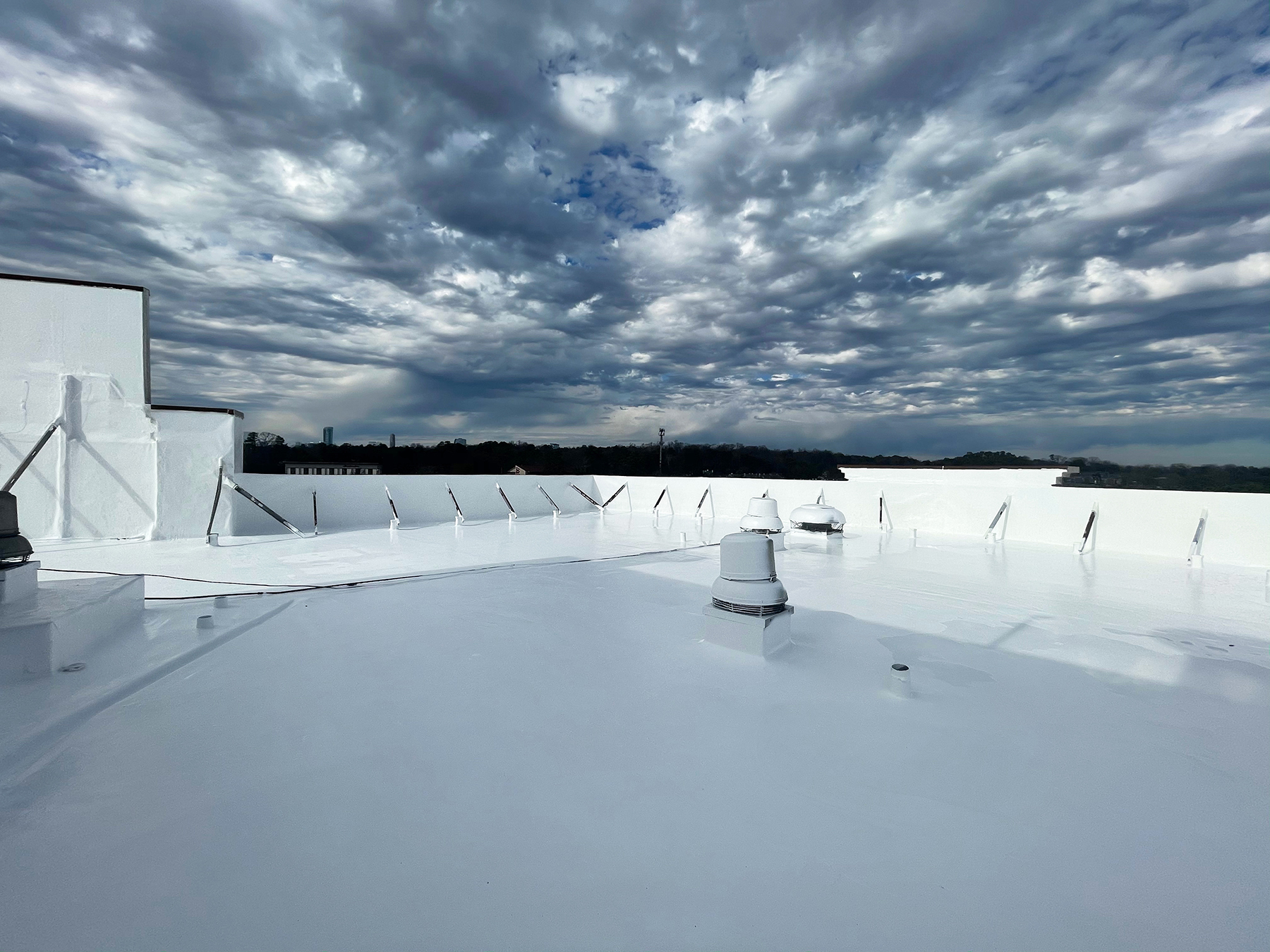
When it comes to protecting and extending the life of a commercial roof, Progressive Materials’ fluid-applied coatings are a smart solution. Two of the most common options on the market are silicone and acrylic roof coatings. While both offer unique benefits, they’re far from equal. In fact, silicone coatings are widely regarded as the superior choice for performance, durability and long-term value. That said, acrylic coatings still have a place, especially when budget constraints are a major factor.
This blog explores key differences when comparing silicone vs. acrylic roof coatings. This can help you make an informed decision based on your project’s priorities – whether that’s maximum protection or cost-effectiveness.
Weather Resistance & Durability
Silicone coatings are prized for their exceptional resistance to extreme weather conditions and UV durability. They’re extremely water resistant and highly effective against intense UV radiation and wide temperature swings, making them an ideal choice for flat roofs in humid or rainy climates.
Acrylic coatings, on the other hand, perform well in a variety of conditions, especially in drier, milder climates. They provide strong UV resistance and form a durable membrane over the roof, protecting it from degradation. While prolonged standing water can wear on acrylic over time, they generally perform very well when the roof has proper drainage.

Longevity and Maintenance
Silicone coatings are long-lasting – often exceeding 20 years with minimal upkeep. Their flexible, non-chalking formulation makes them resistant to wear and tear over time.
Acrylic coatings typically last 10 to 15 years, though recoating is straightforward and can extend the life of the system significantly. With regular inspections and upkeep, an acrylic-coated roof can provide many years of dependable service.
Application Conditions
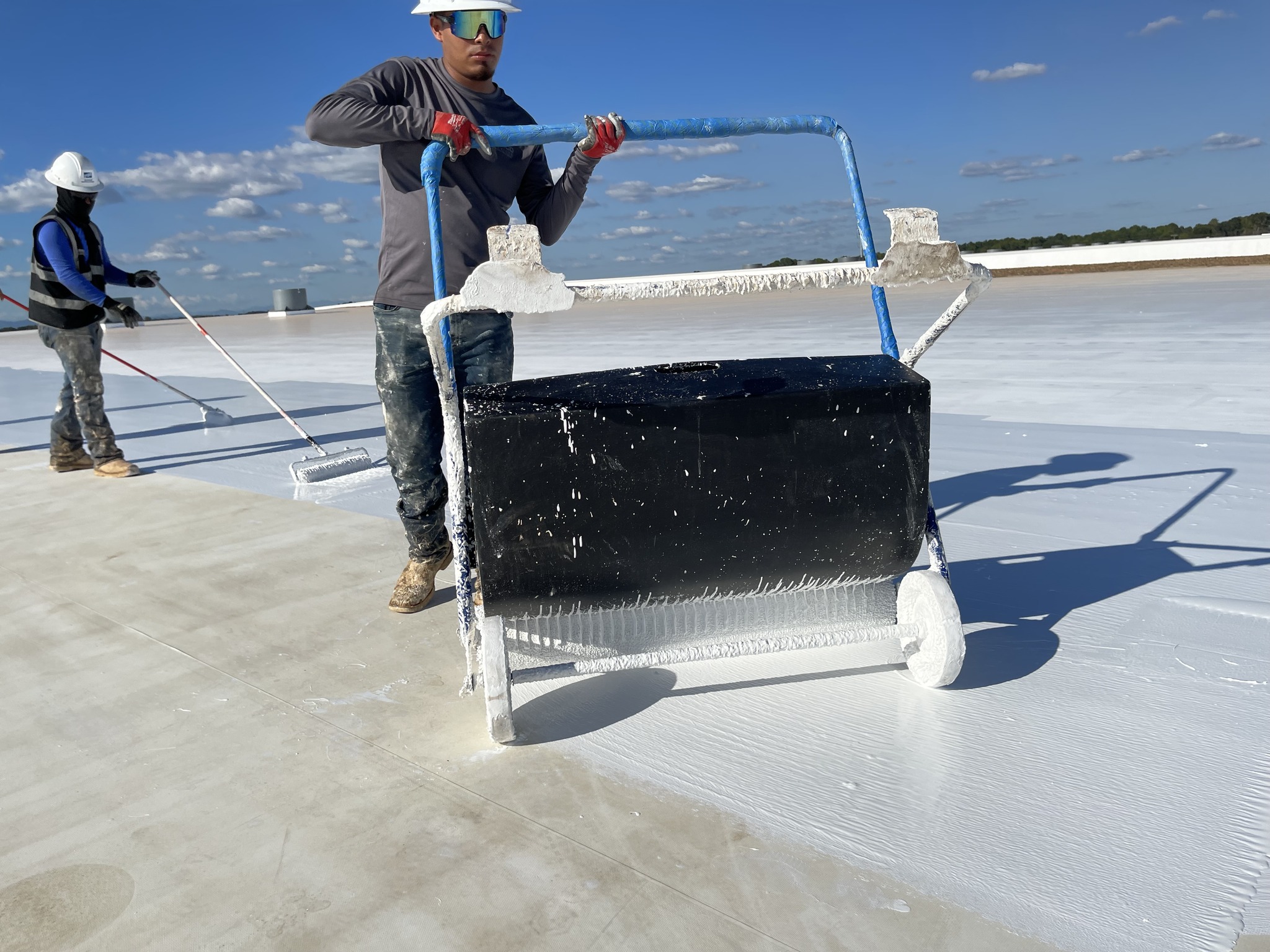
Both products are easy to apply using brushes, rollers or sprayers. However, silicone offers more flexibility in humid conditions, curing reliably even when the weather isn’t perfect.
Acrylic coatings require dry conditions to cure properly, but they’re water-based, which means they’re low-odor and easier to clean up.
Reflectivity & Energy Efficiency
Both acrylic and silicone coatings are highly reflective when they are white in color. This helps reduce heat absorption and lower energy costs. Silicone can retain maximum reflectivity with a simple power wash a few times a year. Acrylics tend to refresh themselves by chalking over time due to UV degradation.
Cost and Budget Fit
Acrylic roof coatings are generally more cost-effective up front, making them an attractive option for building owners who need a reliable solution without a large initial investment. Silicone may have a higher upfront cost, but it offers longer-term value through durability and reduced maintenance.

Final Thoughts
Both silicone and acrylic roof coatings have their place in the roofing industry. Acrylics are a dependable, flexible and affordable choice for roofs with proper slope and in climates where standing water is not a concern.
That said, silicone is the top performer for challenging roof conditions, especially when water resistance, longevity and low maintenance are top priorities.
In short:
- Choose acrylic for value, ease of use and UV protection in dry climates.
- Choose silicone for maximum durability, water resistance and long-term performance under nearly any conditions.
Whichever PM Premium Coating System you choose can extend the life of your roof and provide significant energy and maintenance savings. The right product is the one that fits your building’s unique needs.
Thanks for reading!
